


The Sikh Grammar School: A Model for a Community Resillence Campus
- Andy Chen

- Feb 7
- 3 min read
Updated: Apr 24
Education is evolving, and the architecture that houses it must do more than shelter—it must empower, unify, and endure. The design of learning environments plays a crucial role in shaping not only academic outcomes but also community strength and identity. This is the vision behind positioning the Sikh Grammar School as a Community Resilience Campus: a place where innovative architecture directly inspires learning while serving as a vital, adaptive hub for cultural continuity and collective well-being.

A modern Community Resilience Campus designed to foster learning, culture, and collective strength.
The Philosophy of a Resilience Campus
A Community Resilience Campus transcends the traditional school model. It is a holistic environment where educational excellence, cultural preservation, and social responsibility converge. For the Sikh Grammar School, this means creating a space that:
Anchors Cultural Identity: Architecture that respectfully integrates Sikh heritage and values—such as inclusivity, service (Seva), and equality—into its very fabric, providing students with a profound sense of place and belonging.
Enhances Learning Through Environment: Utilizing evidence-based design where natural light, flexible layouts, and biophilic elements improve focus, creativity, and student well-being.
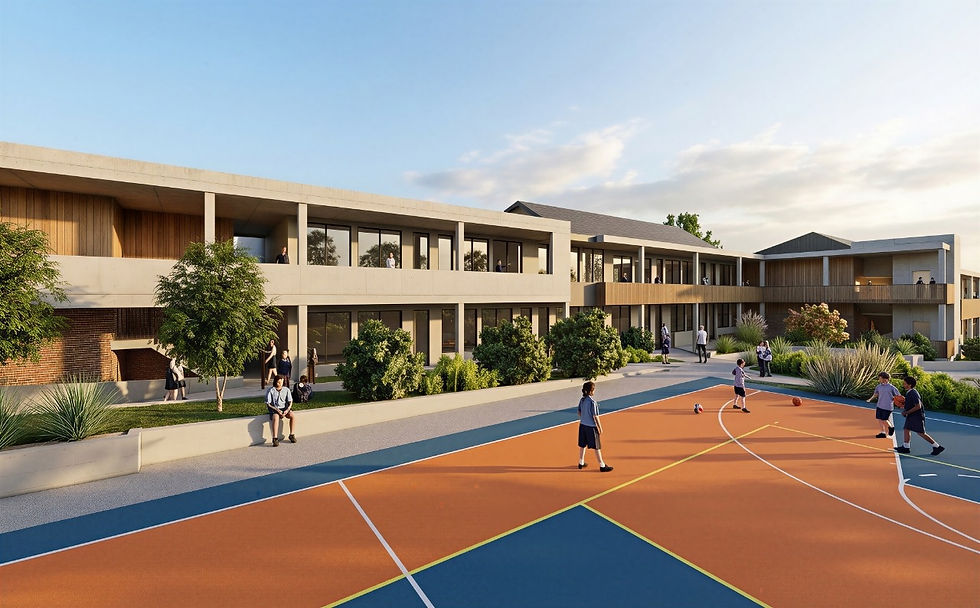
Serves the Community in Multiple Contexts: Designed to function seamlessly as a school, a gathering place for celebration, a sanctuary in times of need, and a center for shared resources and lifelong learning.
Key Architectural Pillars of the Resilience Campus
To bring this vision to life, the design focuses on several interdependent pillars:
1. Flexible & Multi-Functional SpacesSpaces are inherently adaptable. Classrooms can be reconfigured for collaborative projects or large assemblies. Halls and courtyards are designed to host community festivals (melas), religious gatherings (divans), and emergency response coordination, ensuring the campus remains a relevant and active civic asset.
2. Cultural Heart & Symbolic DesignThe campus design draws inspiration from Sikh architectural principles, potentially featuring a central, welcoming atrium symbolizing the core value of openness. Materials, art, and spatial organization will reflect a narrative of heritage and optimism, making the architecture itself a teaching tool about identity and history.
3. Sustainability as a Core ValueThe campus will be a living lesson in environmental stewardship. Incorporating energy-efficient systems, water conservation, and locally sourced materials reduces its footprint while demonstrating practical sustainability to students and the community.
4. Integrated Technology for Future-Ready LearningClassrooms will support digital fluency with integrated technology, while also considering infrastructure that supports community communication and connectivity, ensuring the campus can serve as an information hub.
5. Secure & Nurturing EnvironmentsSafety is foundational to resilience. Design prioritizes secure, welcoming access, with clear lines of sight and safe internal courtyards that provide both physical security and psychological comfort for students and families.
The Sikh Grammar School: A Case Study in Community-Centered Design
This project reimagines what a school can be. It is not an isolated institution but the beating heart of a resilient community. The architecture facilitates:
Intergenerational Connection: Spaces that encourage mentorship and shared learning between elders and youth.
Promotion of Health & Well-being: Dedicated areas for yoga, meditation (Simran), and physical activity, aligned with holistic Sikh values.
Economic and Social Resilience: Spaces that can support local skills workshops, markets, or counselling services, strengthening the community’s social fabric.

Conclusion: Building for Legacy and Future
Positioning the Sikh Grammar School as a Community Resilience Campus is a forward-looking commitment. It moves beyond creating a school building to crafting a lasting legacy—a resilient, inspiring, and active environment where education fortifies culture, and architecture builds community. This model sets a new standard, showing how educational institutions can be designed as cornerstones of sustainability, identity, and collective strength for generations to come.

Comments